
AI & AGENTIC ENGINEERING
The night sky, three friends and a lot of agents
What a weekend at NASA Space Apps Vienna taught us about building software with AI agents.
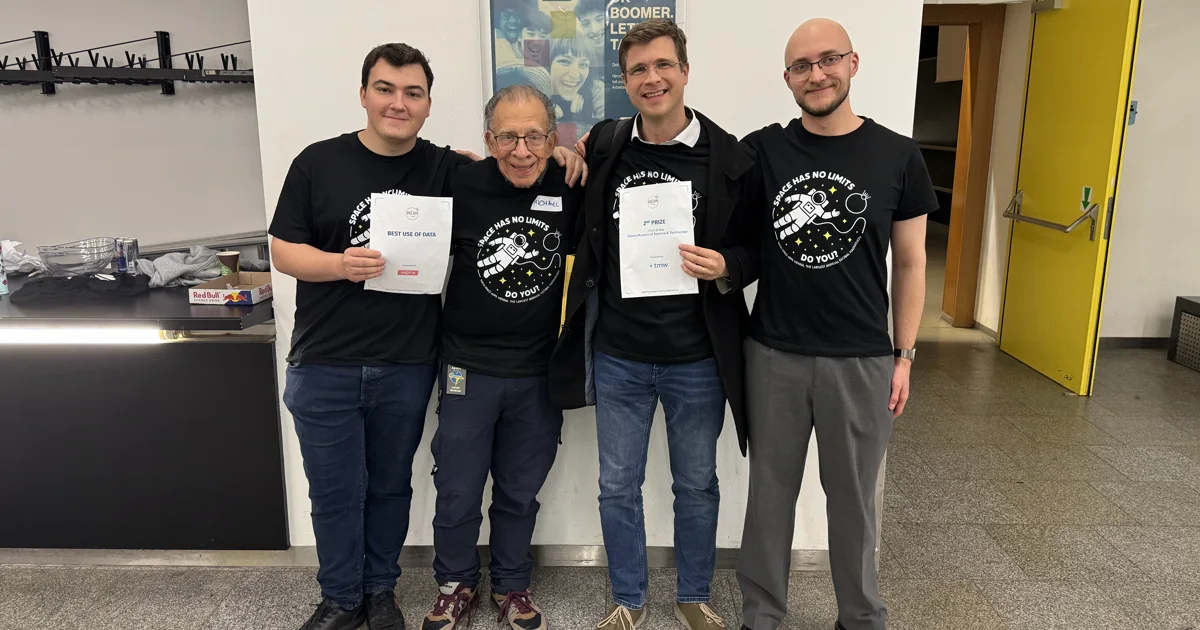
At NASA Space Apps Vienna on 14–15 November, I spent a weekend with three friends of Capacity: Bernhard Götzendorfer, Julian Schmidt and Radosław Winiecki. We built Procedural Space, a tool that helps astronomers decide where to look in NASA’s SPHEREx infrared sky survey. Researchers bring a small Python script for their own question. The tool ranks the sky and shows the real observations behind every hotspot.
AI agents wrote much of the code, and that changes what your tools have to do. When several agents can each finish a working change in minutes, tooling built around a few humans becomes the bottleneck. Tickets take longer to write than the code. Pipelines queue. Reviews wait for someone to wake up. To move at agentic speed, everything has to sit where agents can reach it: the code, the tasks and the checks, inside the loop rather than at the end of it.
Our setup for that was deliberately plain.
One shared machine
No elaborate CI pipeline, at least not yet. We shared one Linux VM, each with our own account. Every person and every agent worked in its own copy of the repository, and every change carried the name of the human responsible. A short rules file told each agent how we work before it touched anything.
Backlog, not Jira
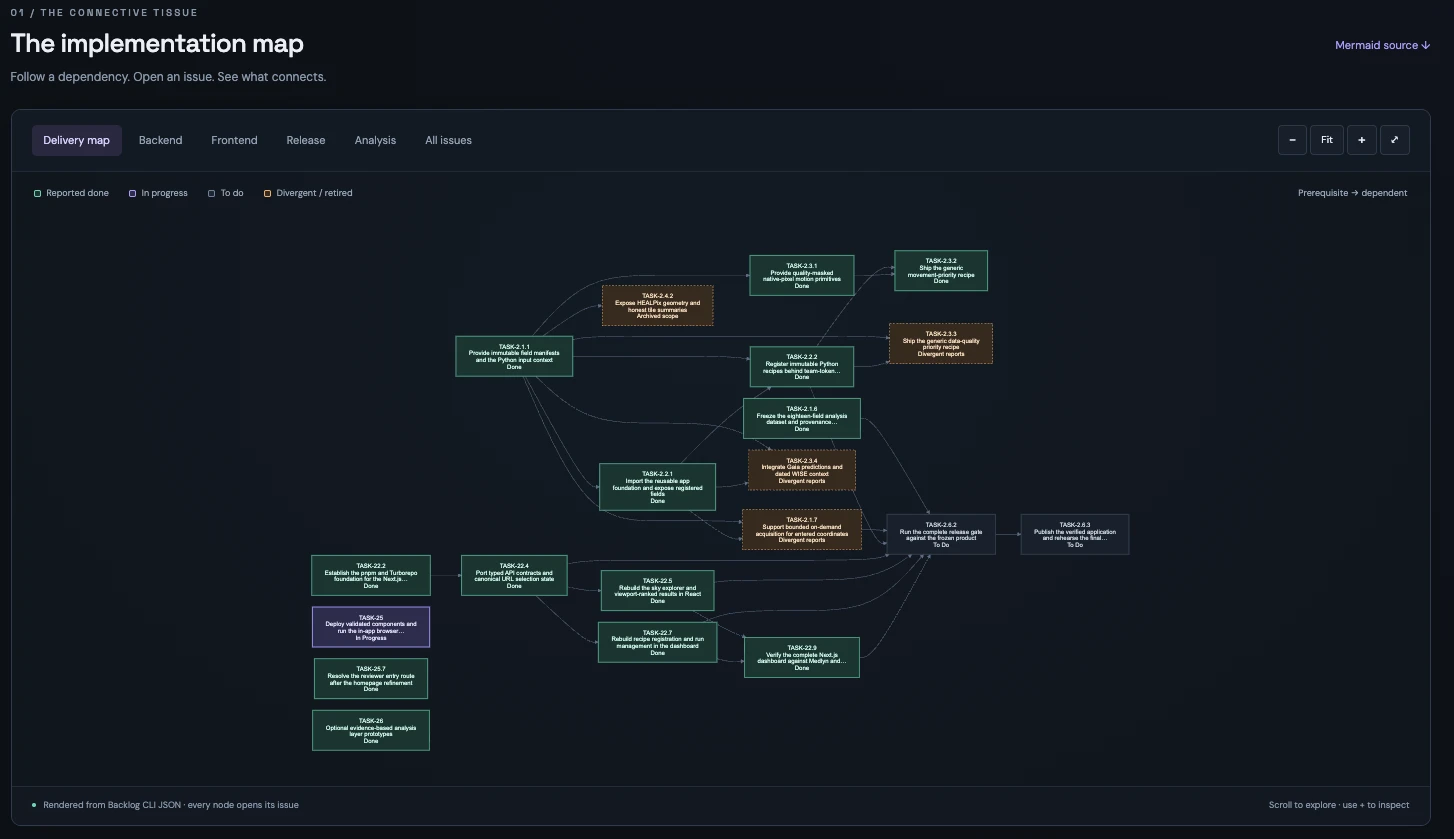
Tasks lived in Backlog.md: plain Markdown files inside the repository, managed from the command line. Agents read and update them like any other file. Each task said what was in scope, how we’d know it was done and what it depended on. A handover note told the next worker where to pick up, often a fresh agent at three in the morning.
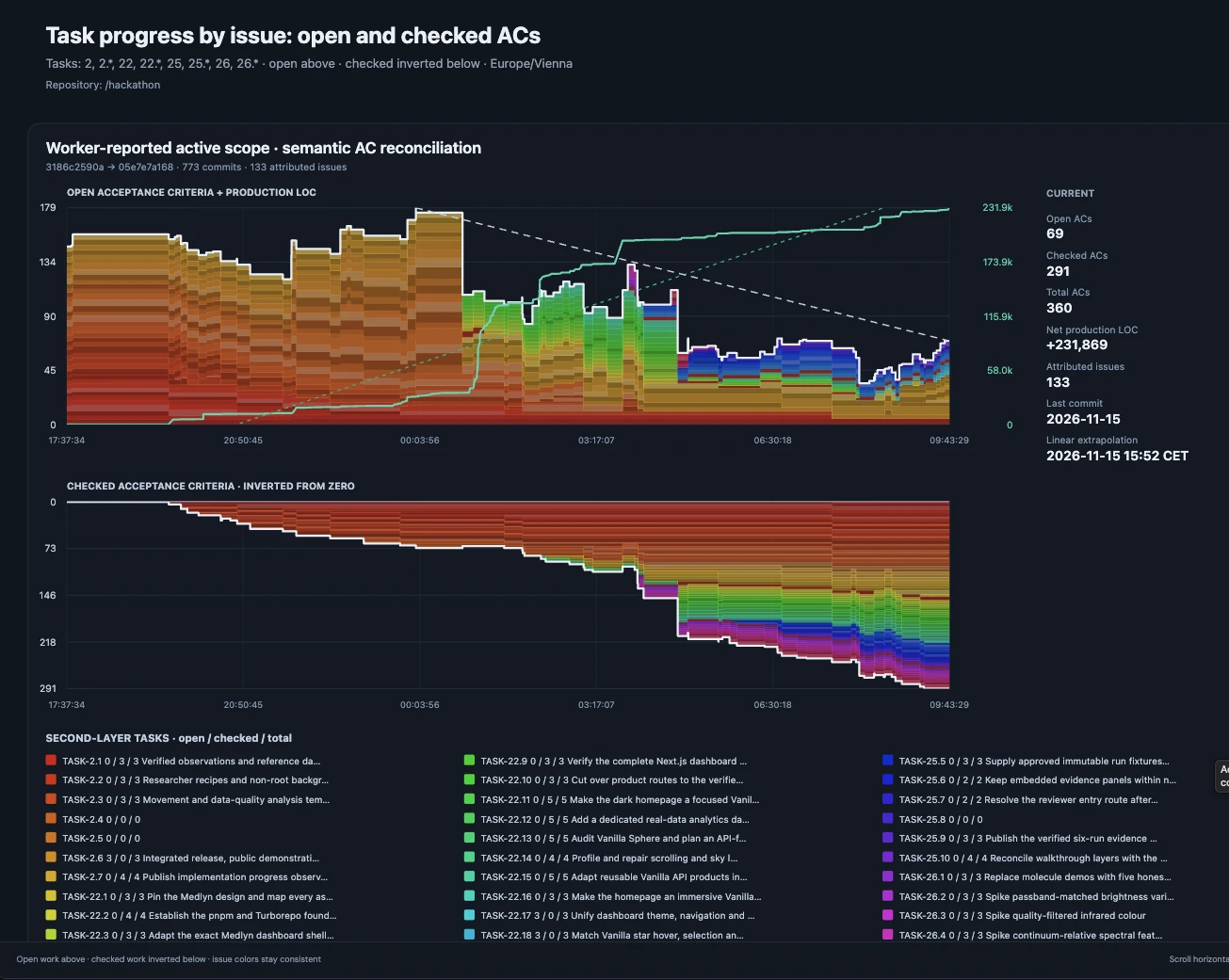
We kept tasks small. Most had between two and five acceptance criteria: enough for one agent to finish and one reviewer to check in a single sitting. Every fifteen minutes, a small job on the VM read the backlog and the Git history and redrew a progress page, so everyone, human or agent, could see what was still open.
Review until there’s nothing left to find
Agents are sometimes confidently wrong. So important work ran in loops: one agent implements, a fresh reviewer agent with no memory of how the code came about looks for problems, the first one fixes them, and the loop repeats until the reviewer has nothing left to report. A person still decides what goes into main.
Let the work grow tendrils
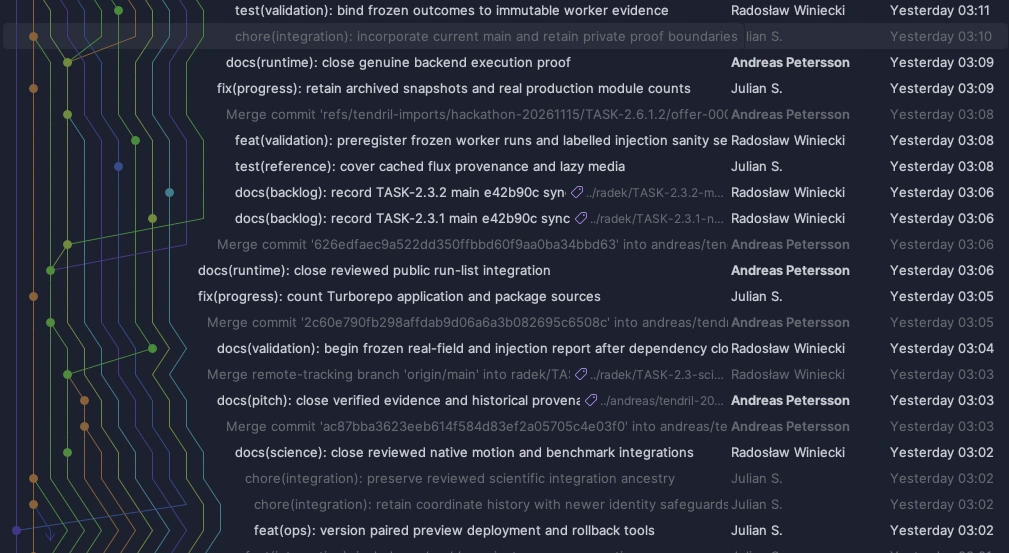
On a weekend, waiting is fatal. With what we call the tendril pattern, dependent work starts as soon as the specific interface it needs is real: built, merged and checked. Review of everything else carries on upstream in the meantime. We’ll explain the pattern properly in our next post.
The result
Procedural Space won second prize in Vienna and was selected as a Global Nominee. Julian’s separate project won Best Use of Data.
One honest observation to finish: using AI wasn’t less work. It was a more intense way of working.
Bring us one workflow.
If you’re working out how agents should fit into your team, we’ll start with one real task, set the boundaries and look at the result together.
Talk to Andreas hello@capacity.at